
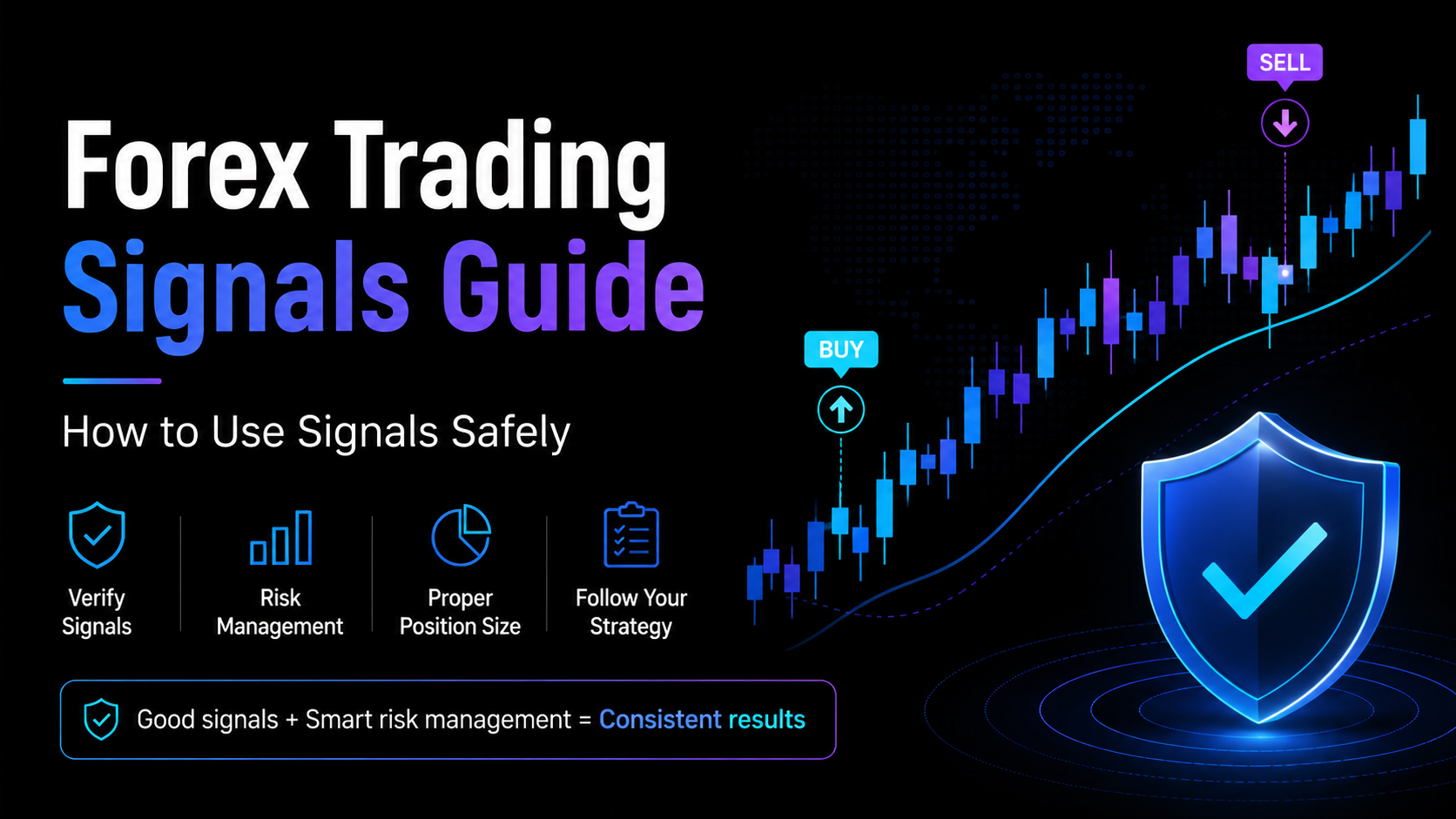
Forex trading signals are trade ideas that suggest when to buy or sell a currency pair, including entry price, stop loss, and take profit levels. Beginners can use forex signals to learn market structure, but signals should never replace risk management, independent analysis, or a clear trading plan.
What Are Forex Trading Signals?
Forex trading signals are trade ideas that suggest when to buy or sell a currency pair, including entry price, stop loss, and take profit levels. Beginners can use forex signals to learn market structure, but signals should never replace risk management, independent analysis, or a clear trading plan.
Forex trading signals are easier to understand when you already know which currency pairs are suitable for new traders. For example, many beginners start with major pairs because they usually have better liquidity and lower spreads. Learning the best forex pairs for beginners can help you choose signals that match your skill level.
For example, a forex signal may look like this:
Buy EUR/USD at 1.0850, Stop Loss 1.0810, Take Profit 1.0920
This means the signal provider expects EUR/USD to rise. The stop loss limits risk if the trade goes wrong, while the take profit shows the target area.
How Do Forex Trading Signals Work?
Forex signals are usually created through technical analysis, fundamental analysis, price action, or automated trading tools. Some traders use indicators like moving averages, RSI, support and resistance, or trendlines. Others follow news events such as inflation data, interest rate decisions, or employment reports.
A good forex trading signal should answer four questions:
- What pair should I trade?
- Should I buy or sell?
- Where should I enter?
- Where should I exit if I am right or wrong?
If a signal does not include a stop loss or risk explanation, beginners should be careful.
Types of Forex Signals
Manual Forex Signals
Manual signals are created by human traders or analysts. These often include market reasoning, chart analysis, and trade commentary. They are useful for beginners who want to understand why a trade setup exists.
Automated Forex Signals
Automated signals are generated by software, trading bots, or algorithms. These can be fast and consistent, but they may fail during volatile news events or changing market conditions.
Some signal providers also share trade ideas for commodities like gold. These are often called gold trading signals, and they usually focus on XAU/USD price movements during high-volatility market sessions.
Free vs Paid Forex Signals
Free forex signals can help beginners learn, but quality varies. Paid forex signal providers may offer more frequent updates, trade explanations, or community support. However, price does not guarantee accuracy. Always check transparency, past performance, risk rules, and user reviews.
How to Read a Forex Signal
A complete forex signal should include:
Signal Element | Meaning |
Currency pair | The market being traded, such as EUR/USD or GBP/USD |
Buy/Sell | The expected direction of the trade |
Entry price | Where to open the trade |
Stop loss | Where to exit if the trade fails |
Take profit | Where to close the trade if successful |
Risk note | How much capital to risk |
A good signal should always include entry price, stop loss, and take profit. To manage each trade properly, traders often use forex risk management tools to calculate lot size, risk percentage, and possible reward before entering the market.
Beginners should risk only a small percentage of their account per trade. Even accurate signals can lose, so the goal is not to win every trade but to protect capital over time.
How to Read a Forex Signal
A complete forex signal should include:
Signal Element | Meaning |
Currency pair | The market being traded, such as EUR/USD or GBP/USD |
Buy/Sell | The expected direction of the trade |
Entry price | Where to open the trade |
Stop loss | Where to exit if the trade fails |
Take profit | Where to close the trade if successful |
Risk note | How much capital to risk |
A good signal should always include entry price, stop loss, and take profit. To manage each trade properly, traders often use forex risk management tools to calculate lot size, risk percentage, and possible reward before entering the market.
Beginners should risk only a small percentage of their account per trade. Even accurate signals can lose, so the goal is not to win every trade but to protect capital over time.
Are Forex Signals Reliable?
Forex signals can be useful, but they are not guaranteed. The forex market is affected by liquidity, volatility, news, spreads, and trader psychology. Reliable signal providers usually explain their strategy, share realistic expectations, avoid “guaranteed profit” claims, and encourage proper risk management.
Be cautious of any provider promising fixed daily profits, 100% accuracy, or risk-free trading. Forex trading involves real financial risk, especially when leverage is used.
Many new traders follow signals because they want consistent income from forex. However, questions like can you make $100 a day trading forex depend on account size, risk management, trading experience, and market conditions.
Best Practices for Beginners Using Forex Signals
Before following any forex signal, use this checklist:
- Check the entry, stop loss, and take profit.
- Avoid trades without a clear stop loss.
- Do not risk too much on one signal.
- Use a demo account first.
- Track every trade in a trading journal.
- Learn the reason behind each signal.
- Avoid revenge trading after losses.
Signals work best when they are used as learning tools, not shortcuts.
Best Practices for Beginners Using Forex Signals
Before following any forex signal, use this checklist:
- Check the entry, stop loss, and take profit.
- Avoid trades without a clear stop loss.
- Do not risk too much on one signal.
- Use a demo account first.
- Track every trade in a trading journal.
- Learn the reason behind each signal.
- Avoid revenge trading after losses.
Signals work best when they are used as learning tools, not shortcuts.
Conclusion
Forex trading signals can help beginners identify trade opportunities and understand how experienced traders approach the market. However, success depends on discipline, risk management, and education. The best forex signals provider are transparent, realistic, and supported by clear analysis.
Ready to trade smarter? Join our free forex trading community at DailyForexTrades and get daily market updates, beginner-friendly trade ideas, and practical risk management tips before your next setup.
FAQs
No forex signal is 100% accurate. The most reliable signals include entry price, stop loss, take profit, and clear market analysis.
Forex signals are generally not illegal, but rules vary by country. Paid signals or personalized financial advice may require regulatory approval.
You can get forex signals from trading communities, signal providers, broker tools, Telegram groups, or your own market analysis. Always test signals on a demo account first.
No. Forex signals cannot guarantee profits because markets are volatile and losses are part of trading.
A good forex signal includes a clear entry, stop loss, take profit, risk explanation, and market reasoning.