

Starting forex trading can feel exciting. The market is open 24 hours a day, currency prices move every minute, and many beginners believe trading can become a quick income source.
However, success does not come from random trades or luck. The Best Practices for New Forex Traders are based on education, discipline, risk control, and patience.
If you are learning how to trade forex, this guide will help you understand what to do, what to avoid, and which beginner forex strategies can support your trading journey.
Risk Warning: Forex trading involves risk. You can lose money, especially when using leverage. Always trade with a plan and never risk money you cannot afford to lose.
Why Beginners Fail in Forex Trading
Many new traders fail because they enter the market without preparation. They may watch a few videos, open a live account, and start trading with real money too quickly.
Common reasons beginners struggle include:
- No clear trading plan
- Poor forex risk management
- Overuse of leverage
- Emotional trading
- Following fake profit claims
- Changing strategies too often
- Trading without stop loss
- Expecting fast results
For example, a beginner may enter a EUR/USD trade just because the price is moving up. But without checking support, resistance, news, or risk level, that trade becomes a guess.
Forex trading for beginners should start with learning, not rushing.
Best Forex Practices for New Traders
The Best Practices for New Forex Traders are simple, but they require consistency.
1. Start With Forex Education
Before trading real money, learn the basics:
- What currency pairs are
- How pips work
- What spreads mean
- How leverage affects trades
- Why stop loss matters
- How market sessions work
Beginners should first understand the forex market before trying advanced strategies.
You can also read related guides on Forex Strategies to build a stronger foundation.
2. Use a Demo Account First
A demo account lets you practice trading without risking real money. It helps you test strategies, understand price movement, and build confidence.
Use demo trading to answer questions like:
- Can I follow my trading plan?
- Do I understand my entry and exit points?
- Am I managing risk properly?
- Do I panic after losses?
Once you become consistent on demo, you can slowly move to a small live account.
3. Follow a Simple Trading Plan
A trading plan keeps you disciplined. It should include:
- Currency pairs you trade
- Entry rules
- Exit rules
- Stop loss rules
- Risk per trade
- Trading sessions
- Maximum trades per day
Without a plan, trading becomes emotional.
4. Use Forex Trading Signals Carefully
Forex Trading Signals can help beginners find trade ideas. A good signal usually includes entry price, stop loss, take profit, and market reason.
However, do not follow signals blindly. Use them as learning support. Check whether the setup matches your strategy and risk level.
Top Forex Strategies for Beginners
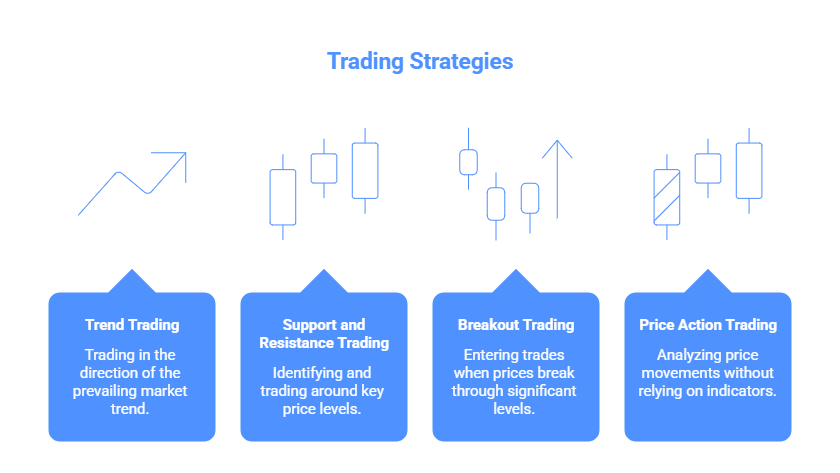
New traders should focus on simple strategies. Complicated systems can create confusion.
1. Trend Trading
Trend trading means following the market direction.
If GBP/USD is making higher highs and higher lows, buyers are in control. A beginner may wait for a pullback before entering a buy trade.
This is one of the most useful beginner forex strategies because it teaches traders to follow momentum.
2. Support and Resistance Trading
Support is a price area where buyers may enter. Resistance is a price area where sellers may enter.
Example:
If EUR/USD has bounced from 1.0800 many times, that level may act as support. A beginner trader may watch that area for a possible buy setup.
3. Breakout Trading
A breakout happens when price moves above resistance or below support.
For example, if USD/JPY breaks above a strong resistance level with strong candles, traders may look for a buy opportunity.
Breakout trading can work well, but beginners should avoid entering too late.
4. Price Action Trading
Price action focuses on candlesticks, trends, and key levels instead of using too many indicators.
It helps beginners understand what the market is doing in real time.
Risk Management Tips
Good forex risk management protects your account. Even the best strategy will fail without proper risk control.
Important Risk Rules
- Risk only 1–2% of your account per trade
- Always use stop loss
- Avoid high leverage
- Do not increase lot size after a loss
- Set realistic profit targets
- Avoid trading during major news if you are new
- Never risk your full account on one trade
For example, if your account is $500 and you risk 2%, your maximum loss should be $10 per trade.
This keeps one bad trade from damaging your full account.
Trading Psychology for New Forex Traders
Trading psychology is about controlling emotions.
Many beginners know what to do but fail because of fear, greed, or impatience.
Common Emotional Problems
- Fear of missing out
- Revenge trading after a loss
- Closing winning trades too early
- Holding losing trades too long
- Overconfidence after one win
One useful rule is this: If you feel emotional, stop trading.
Professional traders do not chase every move. They wait for quality setups.
Common Mistakes to Avoid
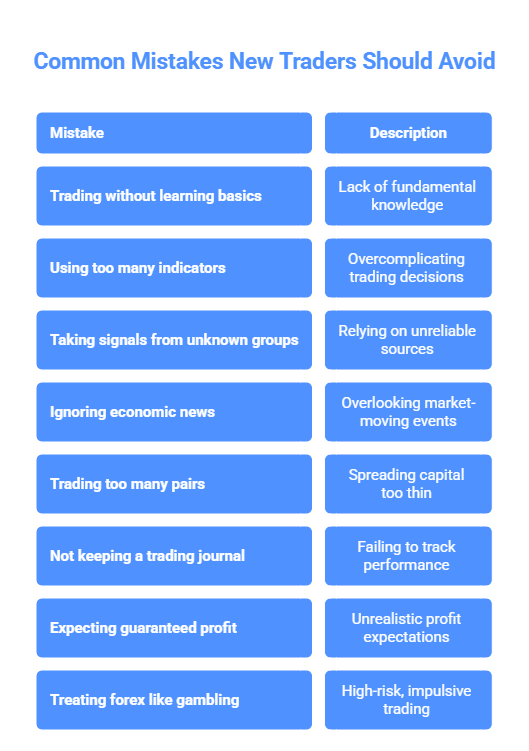
Here are common mistakes new traders should avoid:
- Trading without learning forex basics
- Using too many indicators
- Taking signals from unknown groups
- Ignoring economic news
- Trading too many pairs
- Not keeping a trading journal
- Expecting guaranteed profit
- Treating forex like gambling
Also, do not jump from forex to Gold Trading without understanding volatility. Gold can move faster than major currency pairs, so beginners should study it carefully before trading XAU/USD.
Conclusion
The best practices for new Forex traders are not complicated. Learn the basics, practice on demo, follow a simple strategy, manage risk, and control your emotions.
Forex trading takes time. Beginners who focus on skill-building usually perform better than those chasing quick money.
Start small, stay patient, and keep learning.
Ready to improve your trading journey? Explore our Forex Trading Signals, read our Forex Strategies guide, learn Risk Management, and study Gold Trading before placing your next trade.
FAQs
The best practices include learning forex basics, using a demo account, following a trading plan, managing risk, using stop loss, and avoiding emotional trading.
Beginners should start with a small amount they can afford to lose. It is better to focus on learning and risk management before increasing capital.
Trend trading and support/resistance trading are good beginner forex strategies because they are simple and easy to understand.
Yes, Forex Trading Signals can help beginners learn trade setups, but they should not be followed blindly. Always check risk, entry, stop loss, and take profit.
The biggest mistake is trading without risk management. Many beginners use high leverage, skip stop loss, and risk too much on one trade.