Gold Trading Signals: Complete XAUUSD Trading Guide

Gold Trading Signals: Complete XAUUSD Trading Guide
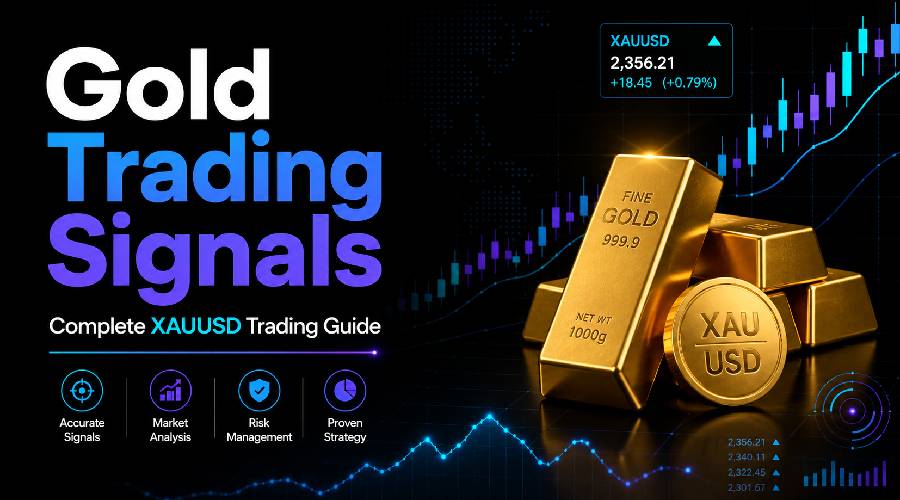
Gold Trading Signals

Gold is one of the most active markets for forex traders. It moves fast, reacts to global news, and offers many intraday opportunities. That is why Gold Trading Signals are popular among beginners and experienced traders.

In simple words, these signals help traders understand possible buy and sell setups on XAUUSD. However, they are not magic alerts. Good signals must include analysis, risk control, and clear trade levels.

Gold also has strong market activity. The World Gold Council says the London OTC market, U.S. futures market, and Shanghai Gold Exchange make up more than 90% of global gold trading volumes. It also reported that average daily trading volumes in 2025 reached US$114 billion on COMEX and US$51 billion on the Shanghai Futures Exchange.

What Are Gold Trading Signals?

Gold Trading Signals are trading alerts for gold, usually based on XAUUSD technical analysis, market news, or automated systems. They help traders identify possible entry, stop loss, and take profit levels.

A common signal may look like this:

Signal Detail

Example

Instrument

               XAUUSD

Direction

                 Buy

Entry

                2350

Stop Loss

               2342

Take Profit

              2365

Reason

Breakout above resistance

These alerts can come from analysts, trading groups, AI gold trading signals, or a gold signal Telegram channel.

How XAUUSD Trading Signals Work

XAUUSD Trading Signals are usually created through technical analysis, fundamental analysis, or automated tools.

Analysts may check:

  • Support and resistance
  • Trend direction
  • RSI and MACD
  • Moving averages
  • Candlestick patterns
  • U.S. dollar movement
  • Interest rate expectations
  • Economic news

For example, if the U.S. dollar weakens after inflation data, gold may rise. A signal provider may then watch for a technical buy setup instead of entering blindly.

In 2026, gold traders also watch central bank demand, investor flows, and geopolitical risk. The World Gold Council noted that investor interest remains strong, while central bank buying is still solid in its 2026 outlook.

Types of Gold Trading Signals

Different traders use different signal styles. Therefore, beginners should understand each type before following alerts.

Signal Type

Best For

Notes

Intraday gold trading signals

Day traders

Usually closed same day

Gold buy sell signals

Simple direction alerts

Need risk confirmation

Real-time gold signals

Fast market moves

Useful during active sessions

AI gold trading signals

Rule-based automation

Still needs human review

Gold forex signals

XAUUSD traders

Often linked to USD movement

If you are new to currency trading, it also helps to understand What Is Forex Trading before using XAUUSD signals.

Benefits of Using Gold Trading Signals

Gold signals can help beginners and active traders in several ways.

They may help you:

  • Save time on chart analysis
  • Find intraday trading opportunities
  • Understand entry and exit levels
  • Learn gold technical analysis
  • Avoid emotional trade decisions
  • Follow structured risk planning
  • Track XAUUSD market behavior

However, signals work best when traders understand the basics. If you are new to currency markets, read Forex Trading Signals to understand how trade alerts work across forex pairs and gold.

Best Indicators for XAUUSD Signals

Good XAUUSD trading signals often combine price action with technical indicators. No indicator is perfect, but each can support better decisions.

1. Moving Averages

Moving averages help identify trend direction. If gold trades above the 50-period moving average, buyers may control the market.

2. RSI

RSI helps identify overbought or oversold conditions. For example, if XAUUSD reaches support while RSI is near oversold, traders may watch for a buy setup.

3. MACD

MACD helps confirm momentum. It can support trend continuation or reversal ideas.

4. Bollinger Bands

Bollinger Bands help traders see volatility. When bands expand, gold may be entering a stronger move.

5. Support and Resistance

These levels are essential for gold technical analysis. Many gold buy sell signals form near key price zones.

Risk Management Tips for Gold Traders

Gold can move fast. Therefore, risk management matters more than signal accuracy.

Follow these rules:

  • Risk only 1–2% per trade
  • Use stop loss on every setup
  • Avoid overleveraging
  • Do not chase late entries
  • Avoid trading major news without experience
  • Use a 1:2 risk-to-reward ratio when possible
  • Stop trading after emotional losses

A good signal can still lose. Your job is to make sure one loss does not damage your account.

Best Time to Trade Gold

Gold is active during major market sessions. However, the best time often depends on liquidity and volatility.

Session

Gold Activity

Asian Session

Usually calmer

London Session

Better volume

New York Session

Strong XAUUSD movement

  London-New York Overlap

   High liquidity and volatility

Many intraday gold trading signals appear during the London and New York sessions. Still, beginners should avoid entering during major news without experience.

Common Mistakes Traders Make

Many traders lose money because they misuse signals.

Avoid these mistakes:

  • Entering after price already moved
  • Ignoring stop loss
  • Using large lot sizes
  • Following unknown Telegram groups blindly
  • Expecting guaranteed profits
  • Trading during news spikes
  • Taking too many signals in one day
  • Trusting automation without testing

If you use automation, study Best Forex Robot before relying on bots for gold or forex trades.

Conclusion

Gold Trading Signals can help traders find XAUUSD opportunities with clearer entry, stop loss, and take profit levels. They are especially useful when combined with technical analysis, market awareness, and strict risk control.

Beginners should start slowly, study each setup, and avoid treating signals as guaranteed income. With patience and discipline, gold signals can become a helpful part of a responsible trading plan.

Disclaimer

This article is for educational and informational purposes only. It is not financial advice, investment advice, or a guarantee of profit. Gold, forex, and CFD trading involve risk, and you can lose money. Always do your own research, use proper risk management, and trade responsibly.

FAQs

What are Gold Trading Signals?

Gold Trading Signals are alerts that suggest buy or sell opportunities on XAUUSD. They usually include entry, stop loss, take profit, and market analysis.

Some Gold Trading Signals can be accurate, but no signal wins every time. Accuracy depends on analysis quality, timing, market conditions, and risk management.

XAUUSD trading signals are gold trade alerts based on gold priced against the U.S. dollar. They are common in forex and CFD trading.

The London session, New York session, and London-New York overlap often provide better liquidity and stronger XAUUSD movement.

Yes, beginners can use gold signals. However, they should start small, use stop loss, and study the reason behind every trade.

Best Forex Robot: Beginner Guide to Forex Automation

Best Forex Robot: Beginner Guide to Forex Automation

Best Forex Robot

Choosing the Best Forex Robot can feel confusing, especially for beginners. Many tools promise easy trading, fast profits, and full automation. However, smart traders know that no robot can remove market risk.

A forex robot is only a tool. It can follow rules faster than a human, but it still needs testing, risk control, and realistic expectations. In this guide, you will learn how forex robots work, what to check before using one, and how to avoid common mistakes.

A forex robot is automated forex trading software that opens, manages, or closes trades based on programmed rules. It may run on platforms like MT4 or MT5 and can use indicators, price action, or algorithmic logic.

What Is a Forex Robot?

A forex robot is a trading program that can analyze the market and place trades automatically. It is also called an Expert Advisor, or EA.

MetaTrader describes Expert Advisors as programs used to automate technical analysis and trading activity in MT4. MetaTrader 5 also allows traders to attach Expert Advisors to charts for automated trading.

How Forex Robots Work

Forex robots follow preset rules. For example, a robot may buy EUR/USD when a moving average crossover appears and RSI confirms momentum.

A basic forex EA may check:

  • Entry conditions
  • Stop loss
  • Take profit
  • Lot size
  • Spread limits
  • Trading sessions
  • Drawdown level

Good robots do not trade randomly. They follow a clear system.

Types of Forex Robots

1. MT4 Forex Robot

An MT4 forex robot is built for MetaTrader 4. Many retail traders still use MT4 because it is simple and widely supported.

2. MT5 Forex Robot

An MT5 forex robot runs on MetaTrader 5. MT5 supports newer tools, more markets, and the MQL5 programming language. MetaTrader notes that MQL5 allows traders to create Expert Advisors, indicators, scripts, and trading strategy tools.

3. AI Forex Trading Bot

An AI forex trading bot may use machine learning, pattern recognition, or adaptive rules. Still, “AI” does not mean risk-free trading.

4. Forex Scalping Robot

A forex scalping robot aims for small, fast profits. It usually needs low spreads, fast execution, and strict risk settings.

Best Forex Robot: What Actually Matters?

The Best Forex Robot is not the one with the biggest profit screenshot. It is the one with clear rules, stable results, and controlled drawdown.

Look for:

  • Verified performance history
  • Low drawdown settings
  • Clear risk controls
  • Real account testing
  • Broker compatibility
  • Transparent strategy logic
  • No guaranteed profit claims

A profitable forex robot should protect capital first.

MT4 vs MT5 Forex Robots

Feature

       MT4 Robot     

      MT5 Robot

Best For

   Forex traders

         Forex + multi-market traders

Language

MQL4

MQL5

Speed

Good

More advanced

Beginner Friendly

Very easy

Slightly advanced

Popular Use

Forex EAs

Advanced automation

Both can work well. The better choice depends on your broker, strategy, and trading goals.

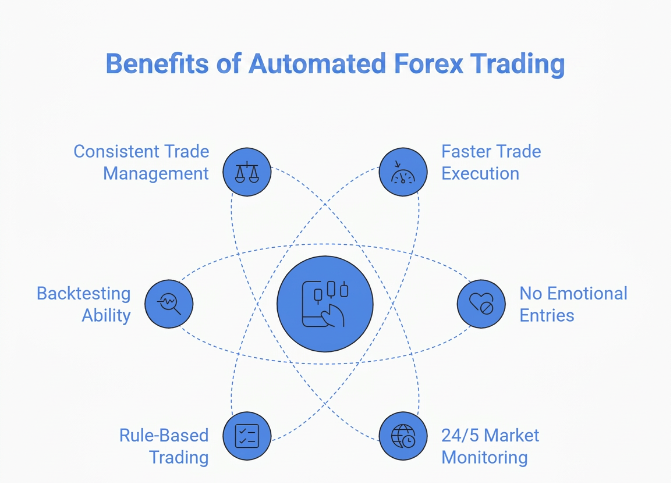
Benefits of Automated Forex Trading

Benefits of Automated Forex Trading

Automated forex trading software can help traders by removing emotional decisions.

Main benefits include:

  • Faster trade execution
  • No emotional entries
  • 24/5 market monitoring
  • Rule-based trading
  • Backtesting ability
  • Consistent trade management

For example, a trader may use a robot to trade only London session breakouts on GBP/USD.

Risks and Limitations

Forex robots can fail. Market conditions change, spreads widen, and news events can break normal patterns.

The CFTC warns that forex trading is volatile and carries substantial risk, including the possibility of losing money quickly. It also warns traders to be cautious of forex fraud and unrealistic claims.

Avoid any robot that promises guaranteed profits.

How to Choose the Best Forex Robot

Use this checklist before buying or testing a robot:

  1. Check verified results.
  2. Review maximum drawdown.
  3. Test on demo first.
  4. Understand the strategy.
  5. Avoid martingale risk.
  6. Use low lot size.
  7. Check broker spreads.
  8. Read real forex robot reviews.

A forex robot with low drawdown is usually better than one showing aggressive returns.

Best Forex Robot for Beginners

The best forex robot for beginners should be simple, low-risk, and easy to monitor.

Beginners should choose robots that:

  • Use fixed lot or low-risk settings
  • Include stop loss
  • Avoid risky grid systems
  • Work on major pairs
  • Provide clear setup instructions
  • Can run on demo accounts

New traders should also study Best Practices for New Forex Traders before using automation with real money.

Forex Robot for Gold Trading: XAUUSD

An XAUUSD forex robot trades gold against the U.S. dollar. Gold can move fast, so risk settings are very important.

For example, a gold robot may trade breakouts during the New York session. But if major news hits, XAUUSD can spike quickly. Always use stop loss, spread filters, and daily loss limits.

Common Mistakes Traders Make

Avoid these errors:

  • Trusting fake profit screenshots
  • Using high lot sizes
  • Running robots during major news
  • Ignoring drawdown
  • Not testing on demo
  • Using unknown brokers
  • Believing “set and forget” claims

If you also follow manual trade ideas, learn how Forex Trading Signals work so you can compare signals with robot-based setups.

Risk Management Tips

Strong risk management matters more than automation.

Use these rules:

  • Risk only 1–2% per trade
  • Set daily loss limits
  • Avoid high leverage
  • Monitor open trades
  • Track monthly performance
  • Pause the robot during abnormal news
  • Withdraw profits carefully

To set realistic goals, review Forex Trading Profit Per Day and understand why daily income is never guaranteed.

Conclusion

The Best Forex Robot is a tool that fits your strategy, risk level, broker, and trading experience. A good robot can save time and reduce emotional trading, but it cannot guarantee profit.

Start with demo testing. Use low risk. Track drawdown. Most importantly, learn the basics before trusting any automated system.

FAQs

What is a forex robot?

A forex robot is automated trading software that follows programmed rules to analyze charts, open trades, manage positions, or close trades.

Forex robots can be profitable in the right market conditions, but profits are not guaranteed. Results depend on strategy quality, risk settings, broker execution, and market volatility.

The Best Forex Robot is one with verified performance, low drawdown, clear strategy rules, strong risk settings, and demo-tested results.

Yes, beginners can use forex robots, but they should start on demo accounts and avoid high-risk settings.

Some robots work on MT4, some on MT5, and some have separate versions for both platforms.

Forex Trading Profit Per Day: Can You Make Money Trading Forex?

Forex Trading Profit Per Day: Can You Make Money Trading Forex?

forex trading profit per day

Many beginners enter forex with one big question: how much forex trading profit per day can I make? Some people expect quick income, while others hear stories about traders making $100, $500, or even more daily. The truth is more realistic.

Yes, you can make money trading forex, but it takes education, practice, discipline, and strong risk management. Forex is not a guaranteed daily income machine. It is a skill-based financial market where profits and losses both happen.

In this guide, you will learn how forex trading works, what daily profits are realistic, which strategies beginners can use, and how to protect your account while building long-term trading confidence.

A realistic forex trading profit per day depends on account size, risk level, strategy, and experience. Beginners should focus on small consistent growth, such as 0.5% to 2% per trade setup, instead of chasing fixed daily income

What Is Forex Trading?

Forex trading is the buying and selling of currencies to profit from price changes. Forex stands for foreign exchange.

For example, if you trade EUR/USD, you are trading the euro against the U.S. dollar. If you buy EUR/USD, you expect the euro to rise. If you sell EUR/USD, you expect the euro to fall.

Forex trading is popular because the market is open 24 hours a day, five days a week. Traders can use different styles such as scalping, day trading, swing trading, and position trading.

However, forex trading for beginners should always start with learning the basics before risking real money.

Can You Really Make Money Trading Forex?

Yes, traders can make money trading forex, but not every trader becomes profitable. Success depends on knowledge, patience, emotional control, and a tested strategy.

Many beginners lose money because they trade without a plan, use high leverage, or follow random signals without understanding risk.

To become profitable, traders need:

  • A clear forex trading strategy
  • Proper risk management
  • Realistic profit expectations
  • Trading discipline
  • A journal to track results
  • Practice on a demo account
  • Emotional control during wins and losses

So, can you make money with forex? Yes. But it should be treated like a professional skill, not a quick passive income shortcut.

How Much Forex Trading Profit Per Day Is Realistic?

The most honest answer is: it depends on your capital, strategy, and risk.

A trader with a $100 account should not expect the same forex trading income as a trader with a $10,000 account. Percentage return matters more than dollar amount.

Example of Realistic Daily Expectations

Account Size

       1% Daily Gain

        2% Daily Gain

$100

          $1

             $2

$500

         $5

             $10

$1,000

        $10

             $20

$5,000

        $50

             $100

$10,000

       $100

             $200

This table shows why account size matters. Making $100 per day from a $100 account is unrealistic and extremely risky. But making $100 from a $10,000 account is more reasonable if the trader has skill and discipline.

Still, no trader wins every day. Some days bring losses. That is why realistic forex profits should be measured weekly or monthly, not only daily.

Lorem ipsum dolor sit amet, consectetur adipiscing elit. Ut elit tellus, luctus nec ullamcorper mattis, pulvinar dapibus leo.

Factors That Affect Forex Trading Income

Your forex trading income depends on several important factors.

Account Size

A larger account can generate larger dollar profits with the same percentage return. However, bigger accounts also require stronger discipline.

Risk Per Trade

Most careful traders risk only 1% to 2% per trade. High risk can grow an account quickly, but it can also destroy it quickly.

Leverage

Leverage allows traders to control larger positions with smaller capital. However, leverage increases both profits and losses. Beginners should use low leverage until they understand market behavior.

Strategy Quality

Profitable forex trading strategies are based on clear rules, not random guessing. A strategy should define entry, exit, stop loss, and take profit.

Trading Psychology

Fear, greed, revenge trading, and impatience can damage even a good strategy.

Lorem ipsum dolor sit amet, consectetur adipiscing elit. Ut elit tellus, luctus nec ullamcorper mattis, pulvinar dapibus leo.

Best Forex Trading Strategies for Beginners

Best Forex Trading Strategies for Beginners


New traders should also learn the best forex pairs for beginners because low-spread and liquid pairs can make trading easier to manage.

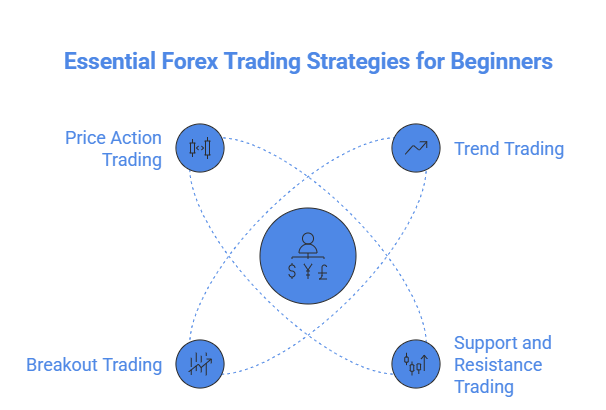
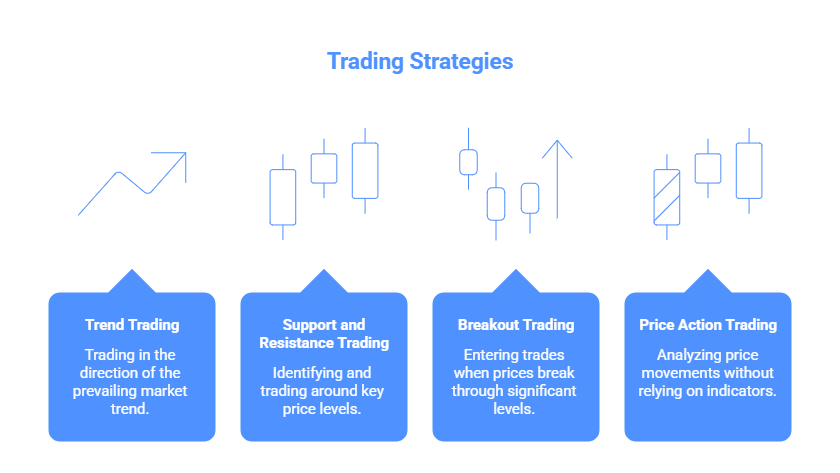
1. Trend Trading

Trend trading means following the market direction. If EUR/USD is making higher highs and higher lows, traders may look for buy setups.

2. Support and Resistance Trading

This strategy focuses on key price levels where the market may bounce or reject.

3. Breakout Trading

A breakout happens when price moves above resistance or below support with strength.

4. Price Action Trading

Price action uses candlesticks, market structure, and clean charts to understand buyer and seller behavior.

These are some of the best forex trading strategies for beginners because they teach market logic instead of relying only on indicators.

Forex Day Trading Strategy Explained

A forex day trading strategy involves opening and closing trades within the same day. Traders avoid holding positions overnight.

Day traders often use:

  • 15-minute, 30-minute, and 1-hour charts
  • London and New York sessions
  • Support and resistance
  • Trend confirmation
  • Risk-to-reward planning

Example:
A trader sees GBP/USD breaking above resistance during the London session. They enter a buy trade, place stop loss below the breakout area, and target the next resistance zone.

Day trading is popular because it offers regular opportunities without overnight risk.

Forex Scalping Strategy for Fast Profits

A forex scalping strategy focuses on small, fast trades. Scalpers may hold trades for seconds or minutes and aim for small pip profits.

Scalping can work in low-spread pairs such as EUR/USD, but it is not easy for beginners. It requires fast decisions, strong focus, and strict discipline.

Scalping is best when:

  • Spreads are low
  • Market liquidity is high
  • Execution is fast
  • The trader avoids emotional entries
  • Stop loss is used on every trade

Beginners should practice scalping on demo first before using real money.

Importance of Forex Risk Management

Forex risk management is the foundation of long-term trading success. A trader can have a good strategy and still lose money without risk control.

Important rules include:

  • Risk only 1% to 2% per trade
  • Use stop loss every time
  • Avoid over-leveraging
  • Do not increase lot size after losses
  • Use a realistic risk-to-reward ratio
  • Stop trading when emotional
  • Never risk money needed for living expenses

A common beginner goal is to protect capital first and grow profits second.

Common Mistakes Beginner Traders Make

Many beginners fail because they focus only on profit and ignore process.

Avoid these mistakes:

  • Chasing unrealistic daily income
  • Trading without a plan
  • Overtrading after a loss
  • Using high leverage
  • Ignoring stop loss
  • Copying signals blindly: Before following any signal, beginners should understand how Forex Trading Signals work and why risk management matters.
  • Trading during major news without experience
  • Changing strategy too often

The best traders are not always the ones who trade the most. They are often the ones who wait for quality setups.

Realistic Forex Trading Success Rate

The forex trading success rate is different for every trader. Many beginners struggle because they enter the market without training, risk control, or emotional discipline.

A realistic view is this: most traders need months of learning and practice before they become consistent. Some may take longer.

Success usually comes from:

  • Testing one strategy
  • Keeping risk small
  • Reviewing mistakes
  • Building emotional control
  • Learning from market behavior
  • Staying consistent during losing periods

Forex trading is a long-term skill. It rewards patience more than excitement.

Best Forex Trading Strategy 2026

The best forex trading strategy 2026 is not a secret indicator or magic signal. For most beginners, the best strategy is a simple plan that combines trend direction, support and resistance, price action, and risk management.

A beginner-friendly strategy may look like this:

  1. Identify the trend on the 1-hour chart.
  2. Mark support and resistance levels.
  3. Wait for price to pull back.
  4. Confirm with a candlestick signal.
  5. Enter with a stop loss.
  6. Target at least a 1:2 risk-to-reward ratio.
  7. Record the result in a trading journal.

Simple strategies are easier to follow, easier to improve, and safer for beginners.

Tips to Become a Consistently Profitable Forex Trader

To build realistic forex profits, focus on consistency.

Helpful tips include:

  • Learn before you earn
  • Practice on demo first
  • Start with small live trades
  • Focus on one or two currency pairs
  • Avoid emotional trading
  • Use a trading journal
  • Accept losses as part of trading
  • Review weekly performance
  • Keep risk small
  • Study forex trading strategies regularly

Consistency comes from repeating good decisions, not from forcing trades every day.

To build better habits, read our guide on Best Practices for New Forex Traders before moving from demo trading to a live account.

Conclusion

So, how much forex trading profit per day can you make? The answer depends on your account size, risk level, strategy, and experience. While it is possible to make money trading forex, beginners should avoid unrealistic expectations and focus on learning first.

Forex trading can create opportunities, but it also carries real risk. The traders who last are the ones who manage risk, follow a strategy, control emotions, and continue improving.

If you are new to trading, start with education, practice on a demo account, learn responsible forex trading strategies, and build your skills step by step with Daily Forex Trades.

FAQs

Can you make money trading forex every day?

You can make money trading forex on some days, but daily profit is never guaranteed. Market conditions change, and even professional traders have losing days.

A realistic forex trading profit per day depends on account size and risk. Beginners should focus on percentage growth and risk control instead of fixed daily income.

With a $100 account, realistic profits are small. For example, a 1% gain equals $1. Trying to make large daily profits from a small account usually requires dangerous risk.

Trend trading, support and resistance, and price action strategies are often best for beginners because they are easier to understand and manage.

Forex scalping can be difficult for beginners because it requires fast decisions and strict discipline. New traders should practice scalping on demo before live trading.

Best Forex Pairs for Beginners to Trade in 2026

Best Forex Pairs for Beginners to Trade in 2026

best forex pairs for beginners

Choosing the best forex pairs for beginners is one of the smartest first steps in forex trading. Many new traders lose confidence because they start with highly volatile or expensive currency pairs without understanding spreads, liquidity, and market behavior.

Forex trading becomes easier when you focus on pairs that are popular, liquid, and simple to analyze. In this beginner forex trading guide, you will learn the best currency pairs to trade, why major pairs are often safer for new traders, and how to choose pairs based on your trading style.

The best forex pairs for beginners are EUR/USD, USD/JPY, GBP/USD, AUD/USD, and USD/CAD. These major forex pairs are popular because they usually offer high liquidity, lower spreads, and clearer market movement compared to exotic pairs.

What Are Forex Currency Pairs?

Forex currency pairs show the value of one currency compared to another currency.

For example, EUR/USD means the euro is traded against the U.S. dollar. If EUR/USD is rising, the euro is gaining strength against the dollar. If EUR/USD is falling, the euro is weakening against the dollar.

Every forex pair has two currencies:

Term

                  Meaning

       Example

Base Currency

        First currency in the pair

     EUR in EUR/USD

Quote Currency

        Second currency in the pair

      USD in EUR/USD

When you buy a forex pair, you buy the base currency and sell the quote currency. When you sell a forex pair, you sell the base currency and buy the quote currency.

Types of Forex Pairs: Major, Minor, and Exotic

Before choosing the best forex trading pairs 2026, beginners should understand the three main types of currency pairs.

Major Forex Pairs

Major forex pairs include the U.S. dollar and another strong global currency. These are usually the most traded currency pairs in the world.

Examples include:

  • EUR/USD
  • GBP/USD
  • USD/JPY
  • AUD/USD
  • USD/CAD
  • USD/CHF
  • NZD/USD

Major pairs often have lower spreads and better liquidity, which makes them easier forex pairs for beginners.

Minor Forex Pairs

Minor pairs do not include the U.S. dollar, but they include major currencies.

Examples include:

  • EUR/GBP
  • EUR/JPY
  • GBP/JPY
  • AUD/JPY

These pairs can be useful, but they may have wider spreads and stronger price swings.

Exotic Forex Pairs

Exotic pairs include one major currency and one currency from a smaller or emerging economy.

Examples include:

  • USD/TRY
  • USD/ZAR
  • EUR/MXN

Exotic pairs are usually not ideal for beginners because they often have high spreads, lower liquidity, and sudden volatility.

Why Choosing the Right Pair Matters for Beginners

The currency pair you choose affects your trading cost, risk, and decision-making. Beginners should avoid pairs that move too fast or have expensive spreads.

The right pair can help you:

  • Understand market movement more clearly
  • Pay lower trading costs through tighter spreads
  • Avoid extreme volatility
  • Practice technical analysis more easily
  • Build confidence with familiar market behavior
  • Follow reliable forex news and analysis

In simple terms, beginner-friendly pairs give you a cleaner learning environment.

Best Forex Pairs for Beginners in 2026

The best forex pairs for beginners are usually major pairs with strong liquidity, lower spreads, and clear market movement. Here are five beginner-friendly options.

1. EUR/USD

Why EUR/USD Is Good for Beginners

EUR/USD is one of the most popular and most traded currency pairs. It represents the euro against the U.S. dollar.

This pair is beginner-friendly because it usually has:

  • Very high liquidity
  • Low spreads
  • Strong market coverage
  • Clear technical patterns
  • Plenty of educational resources

Beginner Tip

EUR/USD is often a good starting pair because it reacts clearly to U.S. and European economic news. Beginners should watch interest rate updates, inflation data, and central bank announcements.

2. GBP/USD

Why GBP/USD Is Popular

GBP/USD is known as “Cable” in the forex market. It represents the British pound against the U.S. dollar.

This pair offers good trading opportunities, but it can move faster than EUR/USD.

Benefits include:

  • High liquidity
  • Strong price movement
  • Good for intraday trading
  • Popular among technical traders

Beginner Tip

GBP/USD can be more volatile, so use smaller lot sizes and wider stop losses. New traders should avoid overtrading this pair during major UK or U.S. news.

3. USD/JPY

Why USD/JPY Is Beginner-Friendly

USD/JPY represents the U.S. dollar against the Japanese yen. It is one of the most traded currency pairs and often has tight spreads.

This pair is useful for beginners because it often respects technical levels such as support and resistance.

Benefits include:

  • Low spreads
  • High liquidity
  • Clear price zones
  • Good during Asian and U.S. sessions

Beginner Tip

USD/JPY can react strongly to U.S. interest rates and risk sentiment. Always check economic news before trading.

4. AUD/USD

Why AUD/USD Is Easy to Follow

AUD/USD represents the Australian dollar against the U.S. dollar. It is popular among traders who follow commodities, China-related news, and risk sentiment.

Benefits include:

  • Beginner-friendly movement
  • Good liquidity
  • Often clean technical structure
  • Useful for swing trading

Beginner Tip

AUD/USD can be influenced by commodity prices and Asian market sentiment. It is often active during the Asian trading session.

5. USD/CAD

Why USD/CAD Is Useful for Beginners

USD/CAD represents the U.S. dollar against the Canadian dollar. It is closely connected to oil prices because Canada is a major oil-exporting economy.

Benefits include:

  • Strong liquidity
  • Clear reaction to economic data
  • Useful for news-based analysis
  • Good for traders following oil trends

Beginner Tip

When trading USD/CAD, watch crude oil price movement. If oil rises strongly, the Canadian dollar may strengthen, which can affect USD/CAD direction.

Which Forex Pair Has the Lowest Risk?

No forex pair is completely risk-free. However, EUR/USD is often considered one of the lowest-risk choices for beginners because it has high liquidity, tight spreads, and strong market coverage.

That said, risk depends more on your trading behavior than the pair itself.

A low-risk beginner approach includes:

  • Trading major pairs only
  • Using low leverage
  • Risking 1–2% per trade
  • Avoiding high-impact news events
  • Using stop loss on every trade
  • Practicing on a demo account first

A safe pair can still become risky if you trade without discipline.

Best Time to Trade Beginner-Friendly Pairs

Forex is open 24 hours a day during weekdays, but not every hour is equally good for beginners.

Best Trading Sessions

Pair

             Best Time to Watch

EUR/USD

             London and New York sessions

GBP/USD

             London and New York sessions

USD/JPY

             Tokyo and New York sessions

AUD/USD

             Sydney and Tokyo sessions

USD/CAD

              New York session

The London-New York overlap is often the most active time for EUR/USD and GBP/USD. Beginners should avoid very quiet hours because spreads can widen and price movement may become unclear.

Common Mistakes Beginners Makele

New traders often make simple mistakes when choosing forex pairs.

Avoid these errors:

  • Trading too many pairs at once
  • Choosing exotic pairs because they look exciting
  • Ignoring spread costs
  • Trading during major news without experience
  • Using high leverage on volatile pairs
  • Switching pairs after every loss
  • Not understanding what affects the currency pair
  • Following signals without checking the pair’s risk or understanding how Forex Trading Signals

Focus on quality, not quantity.

Tips for Choosing the Right Forex Pair

Here are practical tips for beginners:

  1. Start with major forex pairs
    They usually have better liquidity and lower spreads.
  2. Choose one or two pairs first
    This helps you understand their behavior.
  3. Check the spread before trading
    Lower spreads reduce trading costs.
  4. Avoid exotic pairs in the beginning
    They can be unpredictable and expensive.
  5. Study the news behind the pair
    For example, EUR/USD reacts to U.S. and eurozone data.
  6. Use demo trading first
    For safer learning, also follow Best Practices for New Forex Traders before moving from demo trading to live trading.

Match the pair with your schedule
Trade pairs when their main market sessions are active.

Conclusion

The best forex pairs for beginners in 2026 are usually major pairs such as EUR/USD, GBP/USD, USD/JPY, AUD/USD, and USD/CAD. These pairs are popular because they offer strong liquidity, lower spreads, and better learning opportunities for new traders.

If you are just starting, do not try to trade every pair. Choose one or two beginner-friendly pairs, learn how they move, manage your risk, and build consistency step by step.

Forex trading is not about finding the “perfect” pair. It is about choosing the right pair, following a clear plan, and protecting your capital.

FAQs

What are the best forex pairs for beginners?

The best forex pairs for beginners are usually EUR/USD, USD/JPY, GBP/USD, AUD/USD, and USD/CAD because they have strong liquidity, lower spreads, and wide market coverage.

EUR/USD often has one of the lowest spreads because it is highly liquid and heavily traded. However, spreads can vary depending on the broker and market conditions.

Yes, major forex pairs are usually better for beginners because they are more liquid, easier to analyze, and often have lower trading costs than minor or exotic pairs.

Beginners should usually avoid exotic pairs because they often have wider spreads, lower liquidity, and sharper price movements.

A beginner should start with one or two forex pairs. This makes it easier to study price behavior, news reactions, spreads, and trading patterns.

Best Practices for New Forex Traders: Smart Forex Strategies for Beginners

        Forex Trading Signals: A Complete                   Beginner’s Guide for Smarter Trading

Best Practices for New Forex Traders

Starting forex trading can feel exciting. The market is open 24 hours a day, currency prices move every minute, and many beginners believe trading can become a quick income source.

However, success does not come from random trades or luck. The Best Practices for New Forex Traders are based on education, discipline, risk control, and patience.

If you are learning how to trade forex, this guide will help you understand what to do, what to avoid, and which beginner forex strategies can support your trading journey.

Risk Warning: Forex trading involves risk. You can lose money, especially when using leverage. Always trade with a plan and never risk money you cannot afford to lose.

Why Beginners Fail in Forex Trading

Many new traders fail because they enter the market without preparation. They may watch a few videos, open a live account, and start trading with real money too quickly.

Common reasons beginners struggle include:

  • No clear trading plan
  • Poor forex risk management
  • Overuse of leverage
  • Emotional trading
  • Following fake profit claims
  • Changing strategies too often
  • Trading without stop loss
  • Expecting fast results

For example, a beginner may enter a EUR/USD trade just because the price is moving up. But without checking support, resistance, news, or risk level, that trade becomes a guess.

Forex trading for beginners should start with learning, not rushing.

Best Forex Practices for New Traders

The Best Practices for New Forex Traders are simple, but they require consistency.

1. Start With Forex Education

Before trading real money, learn the basics:

  • What currency pairs are
  • How pips work
  • What spreads mean
  • How leverage affects trades
  • Why stop loss matters
  • How market sessions work

Beginners should first understand the forex market before trying advanced strategies.

You can also read related guides on Forex Strategies to build a stronger foundation.

2. Use a Demo Account First

A demo account lets you practice trading without risking real money. It helps you test strategies, understand price movement, and build confidence.

Use demo trading to answer questions like:

  • Can I follow my trading plan?
  • Do I understand my entry and exit points?
  • Am I managing risk properly?
  • Do I panic after losses?

Once you become consistent on demo, you can slowly move to a small live account.

3. Follow a Simple Trading Plan

A trading plan keeps you disciplined. It should include:

  • Currency pairs you trade
  • Entry rules
  • Exit rules
  • Stop loss rules
  • Risk per trade
  • Trading sessions
  • Maximum trades per day

Without a plan, trading becomes emotional.

4. Use Forex Trading Signals Carefully

Forex Trading Signals can help beginners find trade ideas. A good signal usually includes entry price, stop loss, take profit, and market reason.

However, do not follow signals blindly. Use them as learning support. Check whether the setup matches your strategy and risk level.

Top Forex Strategies for Beginners

Top Forex Strategies for Beginners

New traders should focus on simple strategies. Complicated systems can create confusion.

1. Trend Trading

Trend trading means following the market direction.

If GBP/USD is making higher highs and higher lows, buyers are in control. A beginner may wait for a pullback before entering a buy trade.

This is one of the most useful beginner forex strategies because it teaches traders to follow momentum.

2. Support and Resistance Trading

Support is a price area where buyers may enter. Resistance is a price area where sellers may enter.

Example:

If EUR/USD has bounced from 1.0800 many times, that level may act as support. A beginner trader may watch that area for a possible buy setup.

3. Breakout Trading

A breakout happens when price moves above resistance or below support.

For example, if USD/JPY breaks above a strong resistance level with strong candles, traders may look for a buy opportunity.

Breakout trading can work well, but beginners should avoid entering too late.

4. Price Action Trading

Price action focuses on candlesticks, trends, and key levels instead of using too many indicators.

It helps beginners understand what the market is doing in real time.

Risk Management Tips

Good forex risk management protects your account. Even the best strategy will fail without proper risk control.

Important Risk Rules

  • Risk only 1–2% of your account per trade
  • Always use stop loss
  • Avoid high leverage
  • Do not increase lot size after a loss
  • Set realistic profit targets
  • Avoid trading during major news if you are new
  • Never risk your full account on one trade

For example, if your account is $500 and you risk 2%, your maximum loss should be $10 per trade.

This keeps one bad trade from damaging your full account.

Trading Psychology for New Forex Traders

Trading psychology is about controlling emotions.

Many beginners know what to do but fail because of fear, greed, or impatience.

Common Emotional Problems

  • Fear of missing out
  • Revenge trading after a loss
  • Closing winning trades too early
  • Holding losing trades too long
  • Overconfidence after one win

One useful rule is this: If you feel emotional, stop trading.

Professional traders do not chase every move. They wait for quality setups.

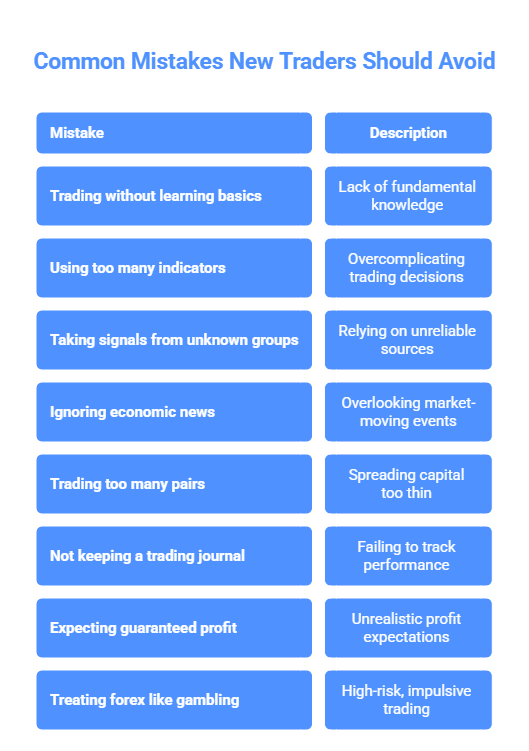
Common Mistakes to Avoid

Here are common mistakes new traders should avoid:

  • Trading without learning forex basics
  • Using too many indicators
  • Taking signals from unknown groups
  • Ignoring economic news
  • Trading too many pairs
  • Not keeping a trading journal
  • Expecting guaranteed profit
  • Treating forex like gambling

Also, do not jump from forex to Gold Trading without understanding volatility. Gold can move faster than major currency pairs, so beginners should study it carefully before trading XAU/USD.

Conclusion

The best practices for new Forex traders are not complicated. Learn the basics, practice on demo, follow a simple strategy, manage risk, and control your emotions.

Forex trading takes time. Beginners who focus on skill-building usually perform better than those chasing quick money.

Start small, stay patient, and keep learning.

Ready to improve your trading journey? Explore our Forex Trading Signals, read our Forex Strategies guide, learn Risk Management, and study Gold Trading before placing your next trade.

FAQs

What are the best practices for new forex traders?

The best practices include learning forex basics, using a demo account, following a trading plan, managing risk, using stop loss, and avoiding emotional trading.

Beginners should start with a small amount they can afford to lose. It is better to focus on learning and risk management before increasing capital.

Trend trading and support/resistance trading are good beginner forex strategies because they are simple and easy to understand.

Yes, Forex Trading Signals can help beginners learn trade setups, but they should not be followed blindly. Always check risk, entry, stop loss, and take profit.

The biggest mistake is trading without risk management. Many beginners use high leverage, skip stop loss, and risk too much on one trade.

Forex Trading Signals: A Complete Beginner’s Guide for Smarter Trading

Forex Trading Signals: A Complete Beginner’s Guide for Smarter Trading

Forex Trading Signals have become one of the most popular tools for beginners and busy traders who want guidance in the fast-moving currency market. Instead of spending hours analyzing charts, economic news, and price movements, traders can use signals to identify possible buy and sell opportunities.

However, trading signals are not magic. They are tools. When used correctly, they can support better decision-making, improve timing, and help traders understand the market more clearly. In this guide, you’ll learn what forex signals are, how they work, their benefits, risks, and how to choose a trustworthy forex signal provider.

What Are Forex Trading Signals?

Forex Trading Signals are trade ideas or alerts that suggest when to buy or sell a currency pair. These signals usually include important trade details such as entry price, stop loss, take profit, and sometimes market reasoning.

For example, a signal may look like this:

Currency PairActionEntry PriceStop LossTake Profit
EUR/USDBuy1.08501.08101.0920

In simple words, forex signals help traders spot potential opportunities in the market. They are commonly used by beginners, part-time traders, and even experienced traders who want extra confirmation before entering a trade.

How Forex Trading Signals Work

Trading signals are usually created through forex market analysis. This analysis can be technical, fundamental, or a combination of both.

Technical analysis focuses on chart patterns, price action, indicators, support and resistance, and trend direction. Fundamental analysis looks at economic news, interest rates, inflation data, central bank decisions, and global events.

Once a trading opportunity is identified, the signal is sent to traders through platforms such as:

  • Telegram groups
  • WhatsApp alerts
  • Email notifications
  • Mobile apps
  • Copy trading platforms
  • Trading dashboards

Some traders manually place the trade after receiving a signal. Others use copy trading, where trades are automatically copied into their trading account.

Types of Forex Trading Signals

1. Manual Forex Signals

Manual signals are created by professional traders or analysts. These signals often include human judgment, market context, and experience-based decision-making.

2. Automated Trading Signals

Automated signals are generated by algorithms, trading bots, or technical indicators. They can be fast and consistent, but they may struggle during unpredictable market conditions.

3. Free Forex Signals

Free signals are usually shared on social media, Telegram channels, or websites. They can be useful for learning, but quality may vary.

4. Paid Forex Signals

Paid forex signals are offered by premium signal providers. These usually include better analysis, risk management guidance, support, and more structured trade alerts.

5. Currency Trading Signals

Currency trading signals focus on major, minor, or exotic currency pairs such as EUR/USD, GBP/USD, USD/JPY, and GBP/JPY.

Free vs Paid Forex Trading Signals

FeatureFree Forex SignalsPaid Forex Signals
CostFreeMonthly or subscription-based
AnalysisLimitedUsually more detailed
SupportRareOften included
ReliabilityMixedDepends on provider
Best ForLearning basicsSerious traders

Benefits of Using Forex Trading Signals

Forex Trading Signals can be valuable when used with discipline and proper risk management.

Key benefits include:

  • Saves time on market research
  • Helps beginners understand trade setups
  • Provides clear entry and exit levels
  • Supports better trading discipline
  • Offers exposure to professional forex strategies
  • Helps traders learn from real market examples

For busy traders, signals can reduce the stress of constantly watching charts. For beginners, they can act as a learning tool when combined with forex trading tips and education.

Risks and Limitations

Although trading signals can be useful, they also come with risks. No forex signal provider can guarantee profits because the forex market is influenced by news, liquidity, volatility, and unexpected price movements.

Common risks include:

  • Over-reliance on signals
  • Following signals without understanding them
  • Poor risk management
  • Fake providers showing unrealistic results
  • Emotional trading after losses
  • Market slippage during fast movements

Always remember: trading signals are not financial guarantees. They should support your decision-making, not replace it.

How to Choose the Best Forex Trading Signal Provider

Choosing the right provider is one of the most important steps. A reliable forex signal provider should focus on transparency, education, and risk control — not just profit claims.

Look for these qualities:

  • Clear entry, stop loss, and take profit levels
  • Realistic performance history
  • Risk management guidance
  • Market explanation behind signals
  • Active customer support
  • No unrealistic profit promises
  • Positive user feedback
  • Consistent communication

Avoid providers that promise “guaranteed profits” or “100% winning signals.” In trading, trust is built through consistency, honesty, and professional risk manageme

Forex Trading Signals for Beginners

For beginners, forex signals can be a helpful starting point. However, you should not blindly copy every trade. Instead, use each signal as a learning opportunity.

Ask yourself:

  • Why is this trade being suggested?
  • What trend is the market following?
  • Where is the stop loss placed?
  • What is the risk-to-reward ratio?
  • Does this trade match my account size?

Beginners should start with small risk, use demo accounts when needed, and focus on learning basic forex strategies before increasing trade size.

Best Practices for Using Trading Signals

To get better results from trading signals, follow a clear plan.

Use Proper Risk Management

Never risk too much on one trade. Many professional traders risk only a small percentage of their account per trade.

Check the Market Before Entering

Even if a signal looks strong, review the chart and current market condition before entering.

Avoid Revenge Trading

Losses are part of trading. Do not increase lot size emotionally after a losing signal.

Track Your Results

Keep a trading journal. Record each signal, result, mistake, and lesson learned.

Combine Signals With Education

The best traders do not only follow signals. They learn from them.

Common Mistakes Traders Make

Many traders fail not because signals are bad, but because they use them incorrectly.

Common mistakes include:

  • Entering trades late
  • Ignoring stop loss
  • Using oversized lot sizes
  • Chasing every signal
  • Joining unreliable groups
  • Expecting instant profits
  • Not learning forex market analysis
  • Switching providers too often

The goal is not to take more trades. The goal is to take better trades with discipline and patience.

Ready to Trade With More Confidence?

Want clear, timely, and professionally analyzed forex signals?

Join a trusted trading signal community and receive structured trade alerts, market insights, and beginner-friendly guidance. Start making smarter trading decisions with signals designed to support your journey.

Sign up today and take the next step toward disciplined forex trading.

Conclusion

Forex Trading Signals can be a powerful tool for traders who want guidance, structure, and better market timing. They can help beginners understand buy and sell signals, learn forex strategies, and follow the market with more confidence.

Still, signals should never replace education, risk management, or personal responsibility. The best results come when traders combine reliable forex signals with patience, discipline, and continuous learning.

Used wisely, Forex Trading Signals can help you trade smarter — not harder.

FAQs

What are Forex Trading Signals?

Forex Trading Signals are trade alerts that suggest when to buy or sell a currency pair. They usually include entry price, stop loss, and take profit levels.

Yes, forex signals can help beginners learn how trades are structured. However, beginners should use signals with proper risk management and education.


Paid forex signals often provide more detailed analysis, support, and consistency. However, quality depends on the forex signal provider.


No. No trading signal can guarantee profit because the forex market is risky and constantly changing.


Choose a provider with transparent results, clear risk management, realistic claims, support, and proper market analysis.