Most traders do not fail because they cannot find good entries. They fail because they risk too much, ignore stop losses, and trade emotionally after losses. In forex, gold, crypto, and prop firm trading, capital protection matters more than one winning trade.
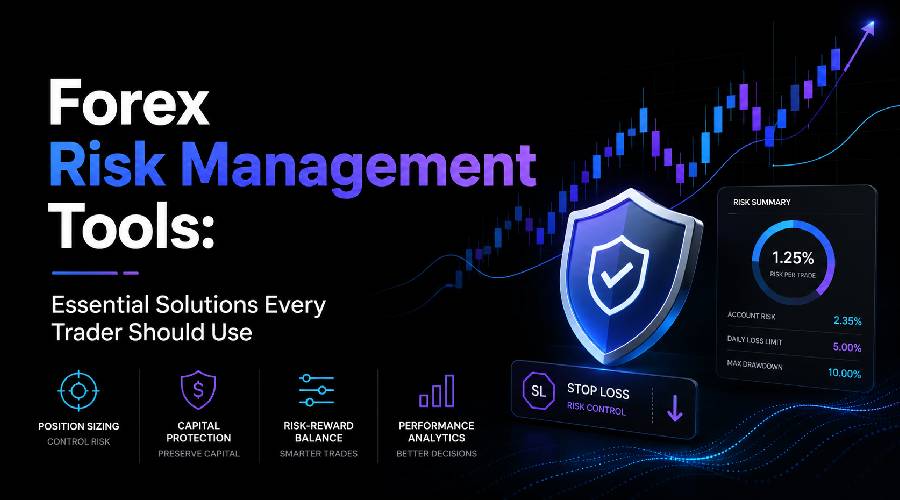
That is why forex risk management tools are essential. These tools help traders calculate lot size, set stop loss levels, manage drawdown, and control risk before entering the market. Whether you follow manual analysis, Forex Trading Signals, or automated systems, risk control should always come first.
Forex risk management tools are calculators, software, and tracking systems that help traders control risk, protect capital, and manage position size. Common tools include position size calculators, stop loss calculators, risk-to-reward calculators, trading journals, drawdown monitors, and trader risk management software.
What Are Forex Risk Management Tools?
Forex risk management tools are practical solutions that help traders decide how much to risk on each trade. They reduce emotional decisions and make trading more structured.
Professional traders use these tools before entering trades. They check position size, stop loss distance, risk-to-reward ratio, and total exposure. This helps them avoid oversized trades and account-damaging losses.
These tools are also common in broader risk management tools in finance, where banks, funds, and portfolio managers measure exposure, volatility, and drawdown before making decisions.
Why Risk Management Matters More Than Winning Trades
Winning trades feel good, but risk control keeps traders alive. A trader can win 60% of trades and still lose money if losses are too large. On the other hand, a trader can win less often and stay profitable with strong risk-to-reward planning.
For example, if you risk $50 to make $100, your risk-to-reward ratio is 1:2. This means you do not need to win every trade to grow your account.
Good risk management helps with:
- Capital preservation
- Drawdown control
- Better trading discipline
- Lower emotional pressure
- More consistent decision-making
This is also why beginners should study Best Practices for New Forex Traders before increasing lot size.
Best Forex Risk Management Tools for Traders
Tool | Main Use | Best For |
Position Size Calculator | Calculates lot size | Forex and prop traders |
Stop Loss Calculator | Defines loss level | Day traders and scalpers |
Risk-to-Reward Calculator | Compares risk vs profit | Strategy testing |
Trading Journal Software | Tracks performance | All traders |
Drawdown Monitor | Controls losing streaks | Funded traders |
Risk Management Software | Automates risk rules | Advanced traders |
Forex Position Size Calculator
A forex position size calculator helps you choose the correct lot size based on account balance, risk percentage, and stop loss distance.
Example:
- Account size: $1,000
- Risk per trade: 1%
- Maximum risk: $10
- Stop loss: 20 pips
The calculator shows the lot size needed so the trade risks only $10. This prevents beginners from using random lot sizes.
Common mistake: Many traders choose lot size first and risk later. Professionals do the opposite.
Stop Loss Calculator Forex
A stop loss calculator forex tool helps traders decide where to place stop loss and how much money is at risk.
For example, if you buy EUR/USD at 1.0850 and place stop loss at 1.0820, your risk is 30 pips. The calculator converts that pip risk into money based on your lot size.
Traders use this tool to avoid hidden risk.
Risk-to-Reward Ratio Calculator
A risk-to-reward calculator compares your possible loss with your possible gain.
Example:
Risk | Reward | Ratio |
$50 | $100 | 1:2 |
$50 | $150 | 1:3 |
$100 | $100 | 1:1 |
A 1:2 or higher ratio is often preferred because it gives traders more room for losing trades.
Trading Journal Software
A trading journal records every trade, including entry, exit, result, emotion, and mistake.
It helps traders answer important questions:
- Which pairs perform best?
- Which strategy works better?
- Do losses happen during news?
- Are emotions affecting decisions?
Without a journal, traders repeat mistakes without noticing patterns.
Drawdown Monitoring Tools
Drawdown shows how much your account falls from its peak. For example, if your account drops from $5,000 to $4,500, your drawdown is 10%.
Drawdown tools help traders pause, reduce risk, and recover safely after losing streaks.
Risk Management Software for Traders
Risk management software for traders can automate safety rules. Some platforms can block trades after a daily loss limit or reduce position size during volatile sessions.
Useful features include:
- Daily loss limits
- Maximum open trade limits
- Lot size protection
- Equity stop
- News filters
- Trade analytics
- Drawdown alerts
If you use automation, also review Best Forex Robot to understand how bots should manage risk.
Forex Risk Management Strategies Used by Professionals
Professional traders combine tools with clear rules.
Common forex risk management strategies include:
- 1% Risk Rule
Risk only 1% of your account on one trade. - Position Sizing
Adjust lot size based on stop loss distance. - Portfolio Diversification
Avoid risking everything on one pair or asset. - Scaling In and Out
Add or reduce positions carefully. - Daily Loss Limits
Stop trading after a fixed daily loss.
Weekly Risk Limits
Protect capital during bad market weeks.
How Risk Management Tools in Finance Improve Trading Decisions
Risk tools are not only for forex. Banks, hedge funds, and asset managers use similar systems to control exposure and protect capital.
Retail traders can use the same logic. Instead of guessing, they measure risk before acting. This improves discipline and reduces emotional decisions.
Pros and Cons of Trading Risk Management Tools
Pros | Cons |
Helps protect capital | Tools cannot guarantee profit |
Reduces emotional trading | Requires consistent use |
Improves position sizing | Bad inputs create bad results |
Helps manage drawdown | Some software costs money |
Supports long-term discipline | Does not replace trading skill |
Common Risk Management Mistakes Traders Make
Avoid these mistakes:
- Overleveraging
- Trading without stop loss
- Revenge trading after losses
- Ignoring position size
- Risking too much on one setup
- Moving stop loss emotionally
- Trading during news without a plan
- Not tracking drawdown
How to Choose the Best Trading Risk Management Tools
Use this checklist before choosing any tool:
- Is it easy to use?
- Does it calculate lot size correctly?
- Does it support your broker or platform?
- Can it track drawdown?
- Does it include daily loss limits?
- Is it useful for forex, gold, or crypto?
- Does it give clear reports?
- Is the cost worth the value?
The best tool is the one you will use consistently.
Conclusion
Forex risk management tools help traders protect capital, control losses, and make better decisions. They are not optional. They are part of serious trading.
Use position size calculators, stop loss tools, journals, drawdown trackers, and risk software before increasing your trading capital. A strong strategy may find entries, but risk management keeps your account alive.
Disclaimer
This article is for educational purposes only. It is not financial advice, investment advice, or a guarantee of profit. Forex, gold, crypto, and leveraged trading involve risk. Always do your own analysis, use proper risk management, and trade responsibly.
FAQs
The best forex risk management tools include position size calculators, stop loss calculators, risk-to-reward calculators, trading journals, drawdown monitors, and risk software.
It calculates lot size based on account balance, risk percentage, stop loss distance, and currency pair value.
It shows how much money you may lose if price reaches your stop loss. This helps prevent oversized risk.
Many traders use the 1% rule. Some experienced traders may risk 2%, but beginners should start lower.
Professionals often use tools with position sizing, drawdown alerts, exposure tracking, and automated risk limits.