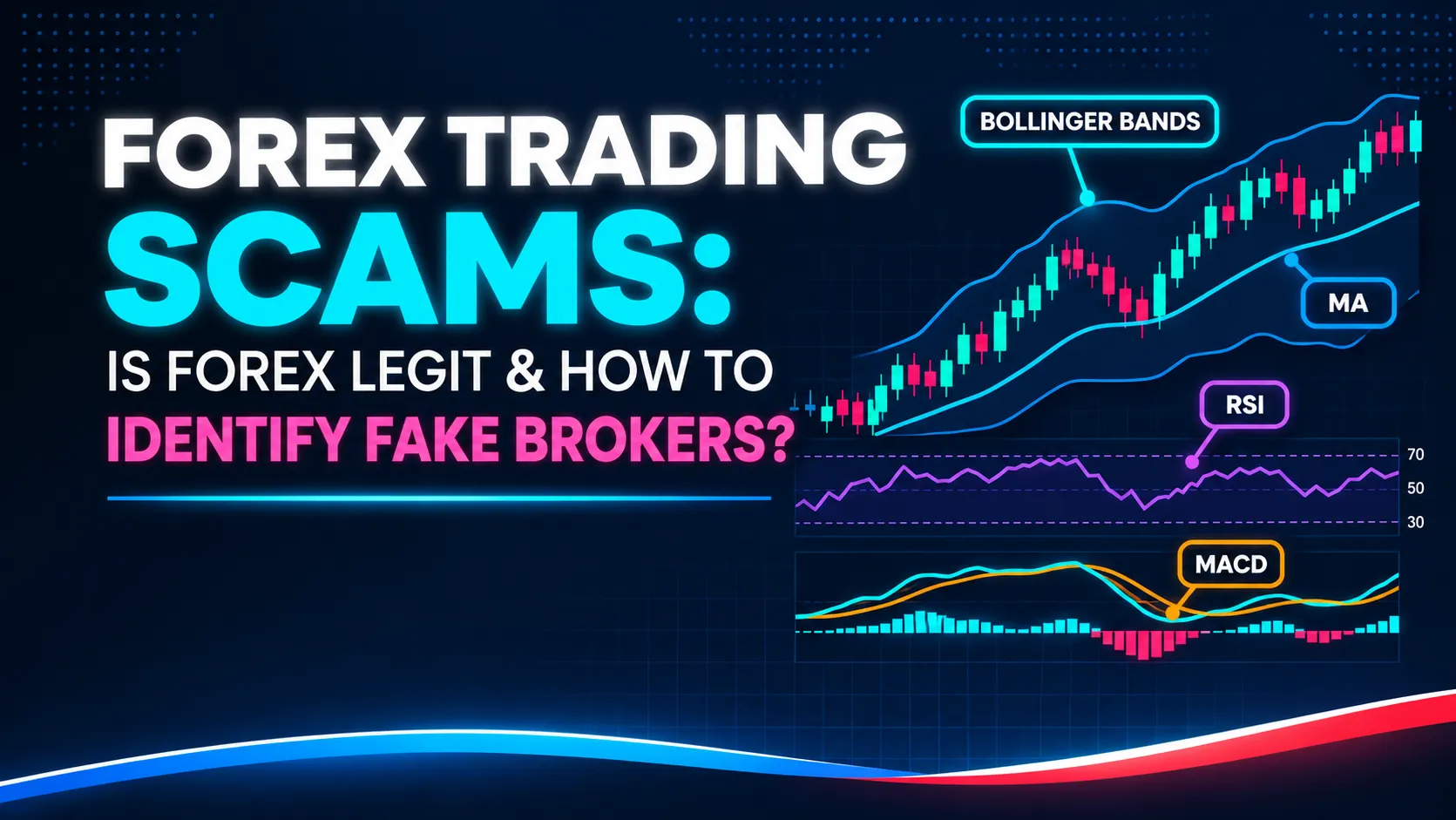
Is forex trading a scam? No, forex trading is a legitimate financial activity, but forex trading scams can put your money at risk. Fraudsters use fake brokers, Ponzi schemes, misleading trading systems, and unrealistic profit claims to attract investors.
Many beginners struggle to distinguish genuine trading opportunities from financial fraud. Understanding the best practices for new forex traders can help you recognise suspicious services before investing.
This guide explains common forex scams, how to identify fake brokers, and practical ways to protect your trading funds.
What Are Forex Trading Scams?
Forex trading scams are forms of financial fraud involving fake investment opportunities, fraudulent brokerage services, or misleading trading products.
Some operate as Ponzi schemes, where money collected from newer investors is used to pay earlier participants instead of coming from genuine trading profits.
Others involve fake brokers, manipulated account statements, or unauthorised account managers.
Not every forex scam is a Ponzi scheme. The underlying problem is financial deception intended to obtain money or mislead investors.
Is Forex Trading Legit or a Scam?
Forex trading is a legitimate financial activity involving the exchange of currencies.
Banks, international businesses, financial institutions, and individual traders participate in the foreign exchange market.
However, legality depends on local regulations and the financial products involved.
A genuine trader may lose money because of changing market prices. Forex fraud involves misleading information, fabricated performance records, or the misuse of investor funds.
Trading through a regulated broker does not remove market risk, particularly when leverage is involved.
Common Types of Forex Trading Scams
Forex scammers use several methods to gain investors’ confidence. Understanding these common trading scams makes suspicious offers easier to identify.
1. Fake Forex Brokers
Fake brokers create professional-looking websites that resemble legitimate trading platforms.
They may display false licences, copied company information, or fabricated customer reviews.
Some impersonate regulated companies by using similar names and website addresses.
Before depositing funds, confirm the broker’s legal identity and regulatory status through official records.
2. Guaranteed Profit and Ponzi Schemes
Some forex scammers promise fixed returns or consistent profits without financial risk.
A Ponzi scheme uses money from new investors to make payments to earlier investors, creating the impression of a successful investment operation.
Such arrangements may collapse when new deposits slow down or investors request withdrawals.
Be cautious of anyone promising guaranteed forex income or encouraging you to recruit other investors.
3. Fake Trading Robots and Signals
Fraudsters may sell automated trading robots or forex signal subscriptions using manipulated performance records.
They often promote unrealistic profits through edited screenshots or fabricated trading histories.
Although genuine trading tools exist, no automated system can consistently predict market movements.
Understanding how forex trading signals work can help traders evaluate signal providers and question unsupported performance claims.
4. Price Manipulation and Hidden Charges
Some fraudulent trading platforms display artificial prices, fabricated account balances, or misleading trading profits.
Others introduce unexpected charges when customers request withdrawals.
However, wider spreads or price differences do not automatically indicate fraud. Liquidity, volatility, and broker pricing can also affect trading costs.
Review account statements, pricing policies, and withdrawal conditions carefully.
5. Social Media and Telegram Scams
Forex scammers often contact potential investors through Telegram, Instagram, WhatsApp, and other social platforms.
They may share luxury lifestyle pictures, fake testimonials, and impressive trading screenshots to appear successful.
Some pressure people to deposit funds immediately or join exclusive investment groups.
Remember that a large social media following does not prove financial credibility.
6. MAM/PAMM and Account Management Scams
MAM (Multi-Account Manager) and PAMM (Percentage Allocation Management Module) systems allow professional managers to handle trading activity across supported investor accounts.
Although legitimate managed trading arrangements exist, fraudsters may exploit these systems by promising guaranteed profits or presenting fabricated performance records.
Some unauthorised account managers also hide fees, misuse investor funds, or create withdrawal difficulties.
Before investing, verify the broker, account manager’s credentials, regulatory permissions where required, and withdrawal rules. Avoid transferring funds directly to unknown individuals.
7. Fake Forex Guru and Coaching Scams
Fake forex gurus claim to possess secret trading methods or exceptional market knowledge.
They may promote expensive mentorship programs, private courses, or VIP trading groups using fake testimonials and unrealistic income claims.
Some instructors advertise guaranteed trading success without providing credible evidence of their expertise.
Before paying for coaching, examine the instructor’s credentials, course material, refund policy, and independent reviews.
Legitimate trading education should explain potential losses rather than promise financial success.
How to Spot Forex Trading Scams Before Investing
Check Broker Regulation
A legitimate broker should clearly identify the company providing its trading services.
Verify the company’s registration through the appropriate financial regulator.
The Commodity Futures Trading Commission (CFTC) provides guidance on checking registration and disciplinary records for firms operating in regulated US markets.
Always confirm that the company’s name, licence details, and website match official records.
Review Withdrawal Conditions
Unexpected withdrawal restrictions are a major warning sign.
Be cautious if a company demands additional taxes, insurance charges, or new deposits before releasing your money.
The Financial Conduct Authority (FCA) warns that fraudulent forex providers may initially display profits before preventing customers from accessing their funds.
Examine Trading Claims and Company Details
Check whether the provider clearly explains its services, fees, ownership, and risk disclosures.
Avoid companies promoting secret formulas, guaranteed trading results, or unrealistic income opportunities.
Understanding why trading strategies may fail can also help traders recognise exaggerated performance claims.
What to Do If You Suspect Forex Fraud
If you suspect forex fraud, stop transferring money immediately.
Save transaction records, emails, account statements, payment details, and conversations with the suspected provider.
Contact your bank or payment service to discuss possible recovery options. Report suspected fraud to the relevant financial regulator and law enforcement authorities.
Avoid recovery agents who guarantee refunds in exchange for upfront payments.
Using appropriate forex risk management tools can help control trading exposure, but these tools cannot prevent investment fraud.
Conclusion
Forex trading scams can appear convincing because fraudulent providers often imitate legitimate financial businesses. Fake brokers, Ponzi schemes, account management fraud, and misleading coaching services can expose traders to serious financial losses.
Before investing, verify regulatory information, examine performance claims, and understand withdrawal conditions. Following responsible forex trading practices for beginners can support safer decisions when navigating currency markets.
FAQs
No. Legitimate forex brokers operate under applicable financial regulations. Check the specific company's authorisation before opening an account.
A forex Ponzi scheme is a fraudulent investment arrangement that uses new investors' deposits to pay earlier participants instead of generating genuine trading profits.
No. PAMM and MAM systems are legitimate account management arrangements when used appropriately. Fraud arises when unauthorised managers deceive investors, fabricate results, or misuse funds.
Review official warning lists published by financial regulators. Check company names and website addresses, but remember that a firm may be fraudulent even if it has not yet appeared on a warning list.
Recovery may be possible depending on the payment method and circumstances. Contact your payment provider and relevant authorities promptly. Recovery is not guaranteed.